ADGA is a one-day workshop that focuses on the theoretical foundations of distributed graph algorithms. The program consists of six invited talks, which are aimed at the general DISC audience.
The talks are designed to cover general aspects of a research topic rather than to present a particular new result. Such aspects include the advances achieved in the topic, the main remaining objectives, the technical obstacles, etc.
ADGA 2026 will be held on Monday, 9 November 2026 in Rome, Italy, and will be co-located with DISC 2026. The workshop will be chaired by Alexandre Nolin.
For information on past and future ADGA workshops, see the web site of the ADGA workshop series.
Schedule
The schedule below is tentative.
| ADGA program | ||
|---|---|---|
| 9:00 | talk 1 | Matthias Bentert: Perfect and Ideal Network Resilience |
| 10:00 | talk 2 | Giuseppe Antonio Di Luna: Content-Oblivious Computation |
| 11:00 | coffee break | |
| 11:25 | talk 3 | Sorrachai Yingchareonthawornchai: Recent advances in vertex connectivity algorithms |
| 12:25 | lunch | |
| 13:45 | talk 4 | Isabella Ziccardi: No Distributed Quantum Advantages for 3-Coloring Rooted Trees |
| 14:45 | talk 5 | Maxime Flin: Quantum Advantage for Distributed Symmetry Breaking |
| 15:40 | coffee break | |
| 16:00 | talk 6 | Eun Jung Kim: A Tight Meta-theorem for LOCAL Certification of MSO2 properties within Bounded Treewidth Graphs |
| 17:00 | workshop ends | |
Invited Speakers
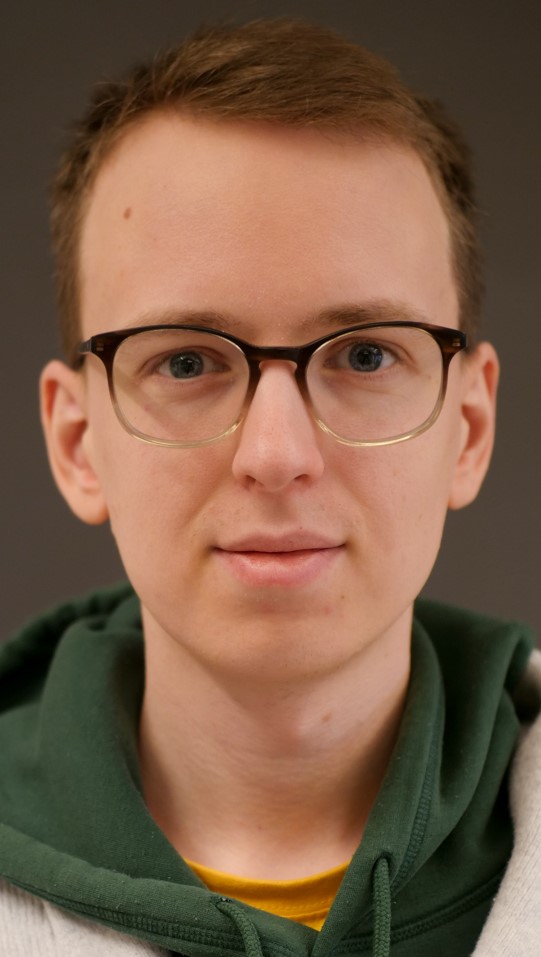
TU Berlin
Matthias Bentert is a postdoctoral researcher in the Intelligent Networks group at TU Berlin. He received his PhD from TU Berlin in 2020 under the supervision of Rolf Niedermeier in the Algorithms and Computational Complexity group. He subsequently worked as a postdoc in the same group and for two years in the Algorithms group at the University of Bergen, Norway, as part of Saket Saurabh’s ERC project. His research focuses on algorithms, mostly on parameterized algorithms and the boundary between polynomial-time solvability and NP-hardness. He is particularly interested in applying theoretical algorithmic techniques to new domains, with previous work including scheduling, algorithmic differentiation, and network algorithms. You can find out more about him on his webpage.
Perfect and Ideal Network Resilience
Modern communication networks support local fast-rerouting mechanisms that react to link failures without first communicating failure information through the network's control plane. This allows them to respond orders of magnitude faster than traditional approaches, reducing packet loss and improving throughput.
Such mechanisms are based on static failover rules that are predefined at each node. A forwarding decision may depend on locally available information, such as the incoming port, the destination of the packet, and the status of incident links, but not on failures elsewhere in the network. Ideally, these local rules provide perfect resilience: every packet reaches its destination as long as its source and destination remain connected after the link failures. Perfect resilience, however, cannot always be achieved. In fact, there are networks on only five vertices for which no perfectly resilient routing exists.
A natural weaker goal is ideal resilience. If the underlying network is $k$-link-connected, we ask only that every packet be delivered whenever at most $k-1$ links fail. Whether ideal resilience can always be achieved remains an open problem.
In this talk, I will give an overview of positive and negative results on local network resilience and highlight some of the ideas behind their proofs. We will also encounter a curious complexity phenomenon: finding a perfectly resilient routing is possible in polynomial time, while verifying that a given routing is perfectly resilient is coNP-hard.
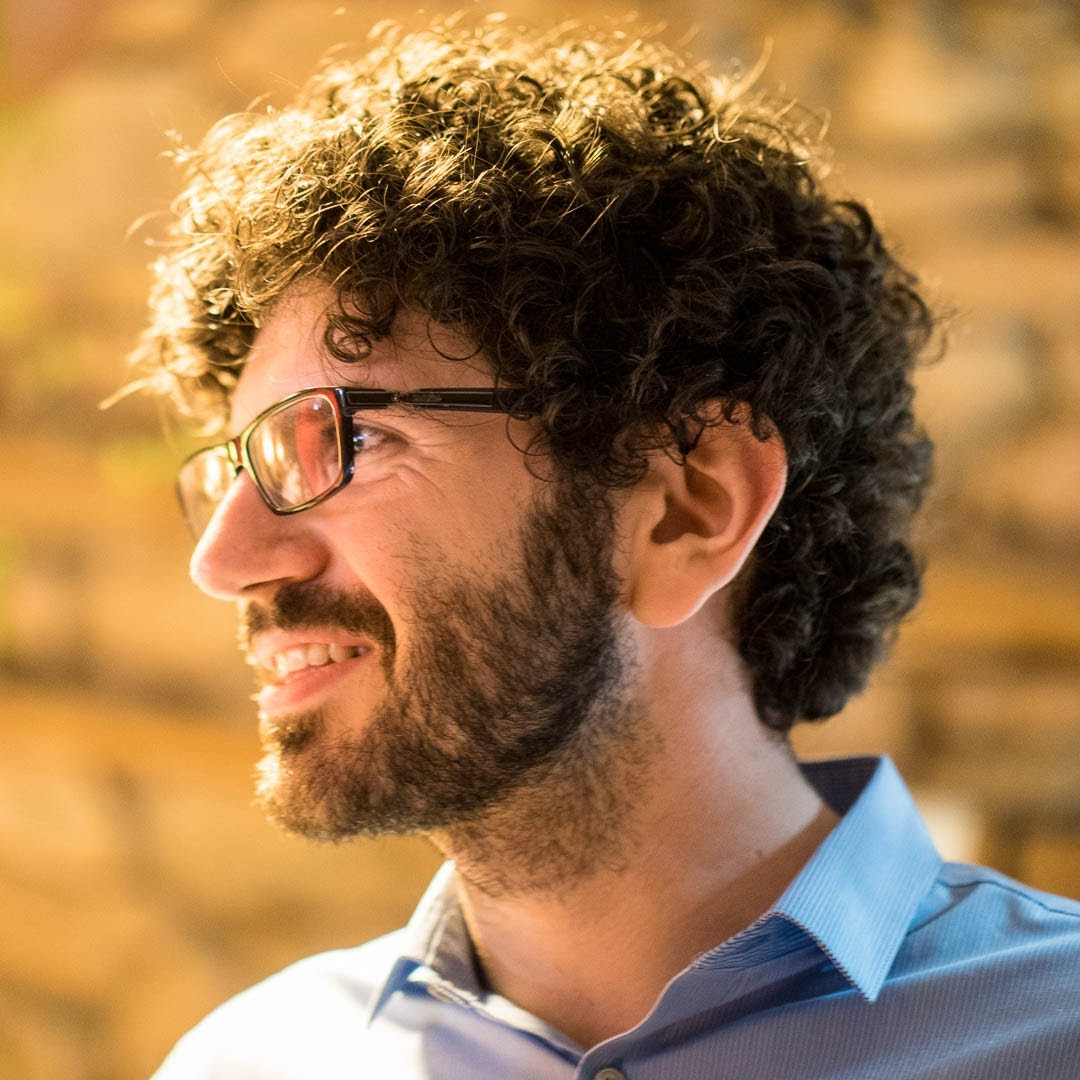
University of Rome – Sapienza
Giuseppe Antonio Di Luna is an Associate Professor at Sapienza University of Rome. His research spans distributed algorithms and systems, with particular interests in anonymous and dynamic networks, fault tolerance, and coordination among mobile agents. He earned his Ph.D. at Sapienza in 2015, studying counting in anonymous dynamic networks, and subsequently held postdoctoral positions at the University of Ottawa and Aix-Marseille University. He has served on numerous conference program committees and co-chaired the organization of EuroSys 2023.
Content-Oblivious Computation
What can a distributed system compute when messages convey no information beyond their arrival? This talk explores asynchronous networks in which an adversary may arbitrarily corrupt every message, while preserving its delivery. Communication then reduces to exchanging content-free pulses. I will survey the content-oblivious model, explain how reliable computation can nevertheless be achieved, and discuss the role of network connectivity and leader election. The talk will also highlight open questions in this interesting and extremely restricted model.
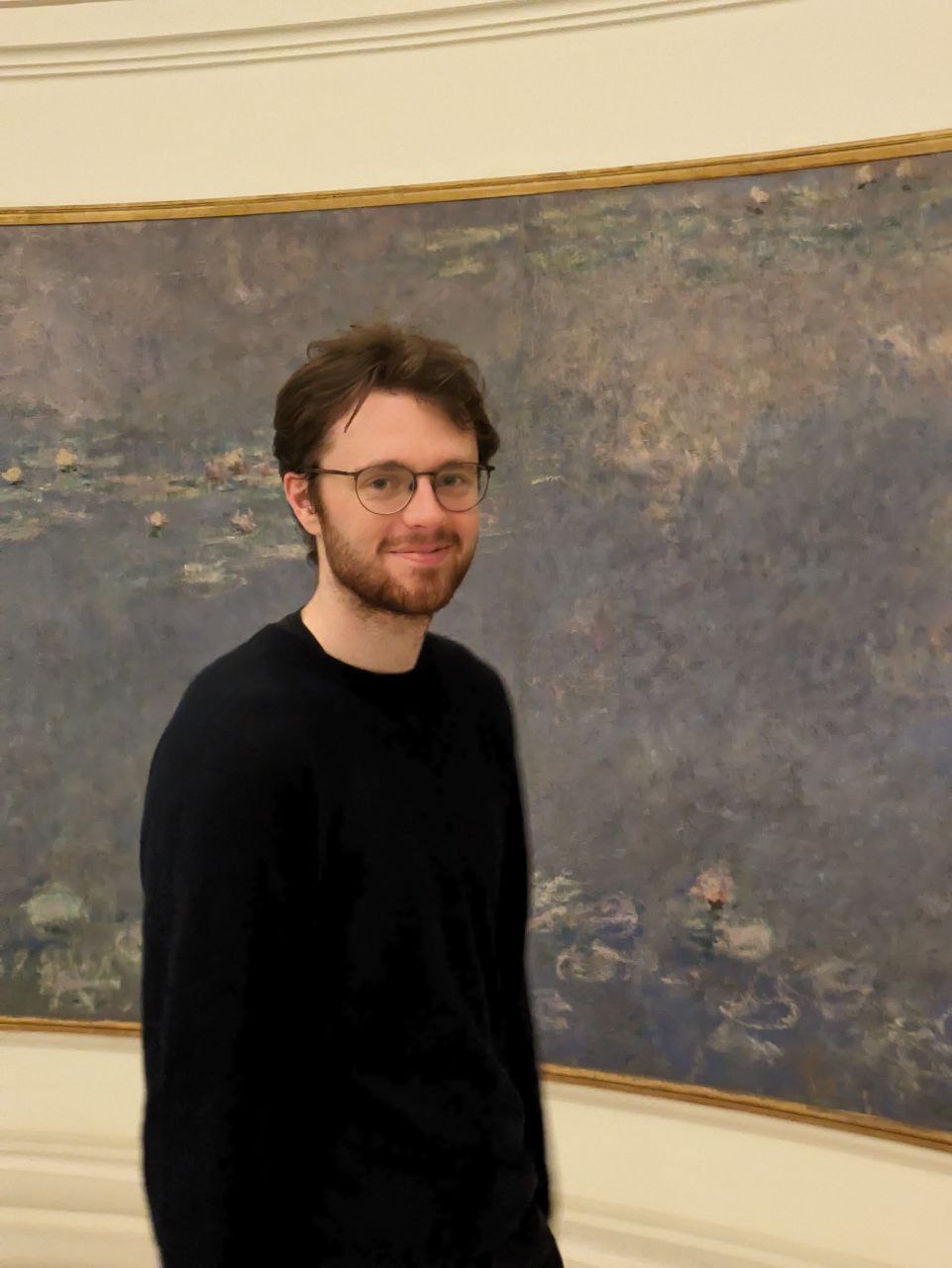
Aalto University
Maxime Flin is a postdoctoral researcher in Jukka Suomela's group at Aalto University, Finland. He received his PhD from Reykjavik University in 2025, advised by Magnús M. Halldórsson. He works on graph algorithms, especially graph coloring in distributed, streaming, and dynamic models.
Quantum Advantage for Distributed Symmetry Breaking
In this talk, I will present a constant-round quantum-LOCAL algorithm for 3-coloring directed cycles with high probability. This follows from the surprising fact that for every $\varepsilon > 0$, there exists a one-way one-round quantum-LOCAL algorithm coloring nodes with 20,000 colors such that, for each edge, its endpoints receive the same color with probability at most $\varepsilon$.

School of Computing, KAIST
Eun Jung Kim is an Associate Professor in the School of Computing at KAIST and a member of the Discrete Mathematics Group at the Institute for Basic Science (IBS). Her research focuses on parameterized algorithms, structural graph theory, and algorithmic applications in linear matroids. She received her PhD in Computer Science from Royal Holloway, University of London in 2010, and subsequently worked as a CNRS researcher in France from 2011 to 2023. She joined KAIST in January 2024.
A Tight Meta-theorem for LOCAL Certification of MSO2 properties within Bounded Treewidth Graphs
Local certification (also known as proof-labeling schemes) asks: can nodes of a distributed network verify a global graph property using only small-sized certificates and one (or constant) round of local communication? Over the past decade, compact certifications — using certificates of size $O(\log n)$, which is information-theoretically optimal for many properties — have been found for specific properties, including spanning trees, planarity, bounded-genus embeddability. A central open question in the area is whether every minor-closed property admits a compact proof-labeling scheme.
In this talk, I will survey the landscape of known local certification results for graph properties, with particular focus on minor-closed families and the structural tools underlying compactness results in this setting. We also review our recent tight meta-theorem (Cook, Kim, Masařík 2025): for every integer $k$ and every property expressible in Monadic Second-Order Logic ($\mathrm{MSO}_2$), there is a proof-labeling scheme of size $O(\log n)$ for graphs of treewidth at most $k$.
Sorrachai Yingchareonthawornchai
Institute for Theoretical Studies, ETH Zurich
Sorrachai Yingchareonthawornchai is a Junior Fellow at the Institute for Theoretical Studies at ETH Zurich. His research focuses on fast graph algorithms and combinatorial optimization, particularly graph connectivity and network design. He received his Ph.D. in Computer Science from Aalto University in 2023, where his dissertation received the School of Science’s Doctoral Thesis Award. Previously, he held postdoctoral positions at the Hebrew University of Jerusalem and the Simons Institute for the Theory of Computing at UC Berkeley.
Recent advances in vertex connectivity algorithms
How efficiently can we determine how many vertex failures a network can withstand before becoming disconnected? This question is captured by vertex connectivity, a classical graph problem that has seen substantial progress in recent years.
In this talk, I will survey these developments, starting with the ideas behind fast sequential algorithms, new structural results and new direction for distributed computation. A central theme is the relationship between finding a minimum global vertex cut and finding minimum vertex cut that separating two vertices. While these problems have nearly equivalent complexity in the sequential setting, their relationship across other computational models reveals both efficient reductions and surprising separations.

CNRS, IRIF, Université Paris Cité
Isabella Ziccardi is a CNRS Postdoctoral Researcher at IRIF in Paris. Her research focuses on distributed algorithms for systems with limited computational and communication capabilities, with a broader interest in distributed random processes on graphs. More recently, she has also been exploring quantum distributed computing.
She received her PhD from the University of L’Aquila, Italy, under the supervision of Andrea Clementi and Luciano Gualà. She subsequently joined Bocconi University in Milan as a postdoctoral researcher, where she worked in Luca Trevisan’s group.
No Distributed Quantum Advantages for 3-Coloring Rooted Trees
Significant effort has been devoted over the past decade to understanding whether quantum resources can offer advantages in distributed computing, and in particular whether they can help overcome locality constraints in networks, typically in Linial's LOCAL model.
In this talk, I will consider the 3-coloring problem on rooted trees. For rooted trees, the deterministic Cole-Vishkin algorithm 3-colors $n$-node trees in $O(\log^{\star} n)$ rounds, matching Linial's classical $\Omega(\log^{\star} n)$ lower bound (FOCS 1987), which holds even for randomized algorithms.
I will show that any algorithm in quantum-LOCAL (without pre-shared entanglement) that properly 3-colors $n$-node rooted trees with probability at least $1-O(1/\log n)$ must perform $\Omega(\log^{\star} n)$ rounds. That is, quantum resources provide no advantage for 3-coloring rooted trees. To prove this, we show a lower bound of $\Omega(\log^{\star}\Delta)$ for 3-coloring any $\Delta$-ary tree with success probability at least $1-1/\Delta$. Our lower bound holds more generally in the non-signaling, bounded-dependence model, which formalizes the principle of physical causality in distributed computing. The proof uses a color lifting technique that departs from the indistinguishability-based arguments underlying most prior non-signaling lower bounds, and instead is similar to Linial's original argument.
This talk is based on joint work with Frédéric Magniez and Pierre Fraigniaud.